
Introduction: Importance of Vehicle Aesthetics
How your car looks is more than cosmetic. A clean, well-maintained finish protects the bodywork, preserves resale value, and prevents minor blemishes from turning into costly repairs. That’s why many owners keep car paint repair kits on hand—they make it simple to deal with damage the moment it appears.
Small issues escalate quickly. A 5 mm stone chip on the bonnet can expose bare metal; add winter road salt and moisture, and surface rust can form within weeks. A key scratch that breaches the clearcoat lets UV light degrade the basecoat, leading to dull patches and flaking. Prompt paint chip repair and automotive scratch removal seals those weak points before they spread.
The financial case is compelling. Appraisers and buyers notice chips and scratches, often negotiating hundreds off for a respray. PCP and lease returns routinely apply refurbishment charges for visible damage outside fair wear and tear. Compared with a body shop visit, a DIY car paint fix can cost a fraction and take minutes instead of days.
Modern solutions raise the bar. Today’s car touch up paint systems offer:
- Accurate colour matching to your registration or colour code for a seamless blend
- Quick-drying formulas that let you layer and finish fast
- Blending solutions that feather edges so repairs don’t look “brushed on”
- Accessories like fine applicators and blending cloths for precise control
Typical use cases include motorway stone chips on the front bumper, door edge scuffs from car parks, scratches along the boot lip from loading, and minor road rash on wheel arches. If the damage hasn’t deformed the panel and hasn’t stripped paint down to large areas of bare metal, vehicle paint restoration with a kit is often the most efficient route.
Key benefits you’ll notice:
- Prevents rust and paint edge lifting
- Restores the clearcoat’s protective barrier
- Maintains a uniform finish for better curb appeal
- Avoids unnecessary insurance claims and downtime
- Reduces waste versus full-panel resprays
For deeper dents, widespread corrosion, or complex pearl finishes, a professional body shop is still the right choice. But for everyday chips and scratches, well-designed car paint repair kits make professional-looking results achievable at home.
Common Causes of Car Paint Damage
Understanding how damage happens makes it easier to diagnose issues and choose the right solution—whether that’s automotive scratch removal, paint chip repair, or a full vehicle paint restoration.
- Road debris and stone chips: Grit and small stones thrown up at speed strike leading edges like the bonnet, front bumper, grille surround, mirror caps, and the lower sills. These impact marks often expose primer or bare metal and are prime candidates for precise paint chip repair using car touch up paint.
- Poor washing techniques: Automatic brush washes and using dirty sponges inflict swirl marks and light scratches in the clear coat. These can usually be corrected with polishing or an automotive scratch removal system; deeper marks that catch a fingernail may need targeted repainting.
- Bird droppings, bug splatter, and tree sap: Highly acidic or enzymatic contaminants etch paint if not removed quickly. You’ll see dull, crater-like spots. If etching penetrates beyond the clear coat, a careful DIY car paint fix with colour-matched touch-up may be required.
- UV exposure and oxidation: Prolonged sun weakens clear coat, causing fading and a chalky surface, particularly on roofs and bonnets. Early oxidation can be polished; advanced failure may demand repainting beyond what car paint repair kits are designed for.
- Road salt and de-icers: Winter grime and salt accumulate on wheel arches, lower doors, and tailgates, accelerating corrosion in existing chips. Swift sealing with touch-up paint helps stop rust from spreading.
- Fuel and harsh chemicals: Overfilled fuel, brake fluid, and strong cleaners can stain or soften clear coat around the filler cap or engine bay. Neutralise and rinse immediately to prevent permanent marks.
- Water spots and mineral deposits: Hard water dries into etched rings on horizontal panels. Mild spots can be removed chemically; severe etching may need machine polishing or refinishing.
- Parking scrapes and impact scuffs: Trolley dings, door-to-door contact, and low-speed bumper rubs leave paint transfer or scratches. Paint transfer often polishes away; cuts through colour coat benefit from car touch up paint.
- Industrial fallout and rail dust: Microscopic iron particles embed in paint, leading to orange specks and pitting if ignored. Decontaminate with an iron remover; touch up any pits that reach the base coat.
Before choosing car paint repair kits, assess depth: clear-coat only, through colour, or to primer/metal. Match the remedy accordingly—for example, polishes for light defects and colour-matched touch-up with a blending solution for chips and deeper scratches.
Benefits of DIY Paint Repair Solutions
For minor chips, scratches, and scuffs, modern car paint repair kits deliver fast, controlled, and cost‑effective results at home. By pairing precisely matched car touch up paint with a blending solution, they help restore the panel’s uniform look without a body shop appointment, keeping your vehicle paint restoration on your schedule.
Key advantages:
- Cost savings: A small bumper scuff or stone-chipped bonnet can run £150–£400 at a body shop. A quality kit costs a fraction of that and handles multiple repairs.
- Prevents rust and paint failure: Sealing a chip quickly stops moisture and road salts from reaching bare metal, preventing corrosion and paint lifting.
- Time and convenience: Quick-drying formulas mean you can complete a DIY car paint fix in 30–60 minutes and drive the same day—no need to leave your car for days.
- Color accuracy and consistency: A 100% colour match guarantee and the ability to search by car registration or colour code reduce the risk of visible mismatches across panels.
- Precision on small defects: Micro applicators target individual stone chips, door-edge nicks, and key marks without overspray, ideal for automotive scratch removal on localized areas.
- Smoother finishes: Patented paints and a dedicated blending solution level edges and improve gloss uniformity, helping repaired spots integrate with surrounding clearcoat.
- Long-term maintenance: A single kit supports repeated paint chip repair over time, with accessories like gloves, blending cloths, and finishing pads included for repeatable results.
- Protects resale value: Keeping high-impact areas—bonnet, front bumper, mirrors—free of visible defects maintains curb appeal and trade-in value.
Example: After a motorway drive, your front bumper is peppered with chips. Clean the area, dab the matched paint into each chip, allow it to flash off, then lightly apply the blending solution to soften edges. Finish with a gentle polish. In under an hour, the peppered look is minimized and the panel is protected.

When to go pro: If damage involves large areas, deep dents, cracked substrates, or peeling across multiple panels, a professional respray is the safer route. For localized chips, scuffs, and clearcoat scratches, high-quality car paint repair kits like those from Chipex offer an efficient, effective solution at home.
Key Features of a Quality Repair Kit
Not all car paint repair kits are created equal. The right kit should make a DIY car paint fix fast, predictable, and virtually invisible while protecting the surrounding finish. Look for these features to ensure reliable vehicle paint restoration.
- Verified colour match: A kit that guarantees an exact OEM match based on your registration number or factory colour code eliminates guesswork. This is crucial for metallics, pearls, and complex tri-coats, where even slight hue shifts are obvious in sunlight.
- Advanced car touch up paint: High-solids, finely pigmented paint that self-levels helps fill chips without shrinking. UV-stable chemistry resists fading and chalking, maintaining gloss over time.
- Quick-drying, layerable formula: Fast set-up (minutes, not hours) lets you build thin layers for deep stone chips, reduce dust contamination, and finish the job in one session.
- Blending solution for seamless edges: A dedicated remover/blender dissolves excess paint around the repair, feathering edges so you avoid “blob” ridges—essential for paint chip repair and automotive scratch removal along door edges or bumpers.
- Complete application tools: Expect precision micro-brushes for pinpoint chips, flexible applicators for wider scuffs, lint-free cloths, masking tape, and nitrile gloves. These small details improve control and finish quality.
- Proper surface prep: Degreasers or panel wipes ensure adhesion by removing waxes and silicones. For exposed metal, rust inhibitors prevent future bubbling. Light abrasive pads help key glossy surfaces where needed.
- Finishing and protection: A fine polish or finishing compound refines texture and restores clarity. Some systems include a clear coat or sealant to match factory gloss and add durability.
- Step-by-step guidance: Clear instructions and support—ideally with video tutorials—reduce mistakes and speed up first-time results.
- Broad paint-system compatibility: The kit should work on solid, metallic, and pearlescent finishes and be safe for modern basecoat/clearcoat systems.
- Value and longevity: Enough material to tackle multiple chips, sensible shelf life, and secure, resealable bottles mean the kit is ready for future touch-ups.
For example, Chipex car paint repair kits combine a 100% Colour Match Guarantee, a quick-drying, patented touch-up paint, and a purpose-built blending solution—plus registration or colour code lookup—so you can achieve a smooth, factory-like repair at home.
Step-by-Step Guide to Flawless Repair
Start by assessing the damage. If your fingernail catches in a line, it’s a scratch that may need paint. If it glides over a small crater, it’s a chip. Clearcoat-only marks often respond to polishing; exposed primer or metal calls for car touch up paint.
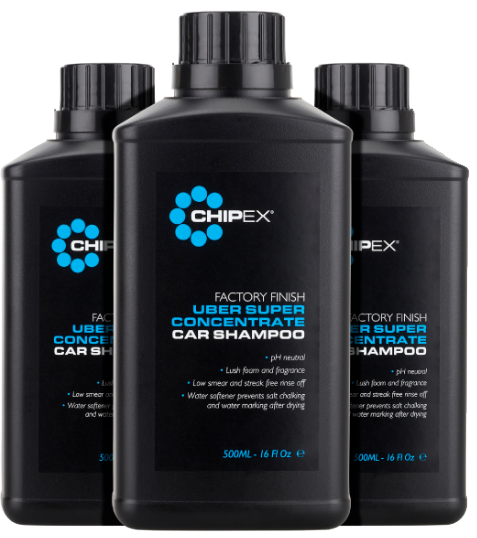
Prepare the surface. Wash the area with a pH-neutral shampoo, dry, then wipe with isopropyl alcohol to remove wax and oils. Mask adjacent trim with low-tack tape. Work in shade between 10–25°C to ensure consistent results with car paint repair kits.
Confirm your colour. Use your registration or colour code to order the correct shade, then test the paint on masking tape to verify the 100% colour match before touching the panel.
For paint chip repair:
- Shake the bottle thoroughly.
- Load a small micro-applicator and place tiny drops into the chip, just filling the cavity without overflowing.
- Let the coat flash off per the kit instructions (typically a few minutes).
- Apply the blending solution on a folded cloth and lightly sweep across the repair to dissolve excess paint on the surface while leaving the fill intact. Wipe in one direction; don’t scrub into the chip.
- Repeat thin layers until level with the surrounding paint. Deep stone chips on a bonnet usually need 2–4 passes.
For automotive scratch removal:
- If the scratch is in clearcoat only (fingernail barely catches), polish with a dedicated compound and a foam pad until the line disappears, then refine with finishing polish.
- If colour or primer is exposed, run a narrow bead of paint along the scratch in sections. Allow to set, then use the blending solution to remove high spots, working perpendicular to the line. Build in thin passes to avoid ridges.
Refine and protect. After the final blend, use the finishing polish to restore gloss and unify texture. Give the repair time to cure (check kit guidance) before applying a sealant or wax to complete the vehicle paint restoration.
Practical tips for a DIY car paint fix:
- Multiple thin layers beat one thick one.
- Keep applicators clean to avoid smearing.
- Tackle several small chips at once; it’s faster while tools are out and paint is mixed.
With the right process and a quality kit, even door-edge nicks and highway stone strikes can be made virtually invisible.

Achieving a Seamless Color Match
A seamless color match starts with exact identification of your factory paint. Every vehicle has a paint code—typically on the driver’s door jamb, engine bay bulkhead, or service book. In the UK, the quickest route is to search by registration to pull the correct OEM code. Example: BMW 300 (Alpine White), Ford J7 (Magnetic Grey), Volkswagen LA7W (Reflex Silver). Note whether your finish is solid, metallic, or a tri-coat pearl, as this affects the application steps in car paint repair kits.
Work in bright, natural light and on a cool, clean panel. Degrease with isopropyl alcohol to remove waxes and silicones that cause color drift. Shake the car touch up paint for 60 seconds; for metallics, roll the bottle and stir to disperse flakes evenly.
Always test before committing. Use the supplied card or an inconspicuous area to lay two ultra-thin coats, allowing each to dry. If the test spot looks too dark, apply thinner, fewer passes; too light, add a third ultra-thin pass. For metallic paints, avoid brushing in long strokes; instead, dab lightly so flake orientation mirrors the surrounding panel.
For paint chip repair, fill only the defect, not the surrounding clearcoat. Let the quick-drying formula flash, then add a second micro-layer if needed. Feather the edge 1–2 mm beyond the chip to create a blend zone. Use the blending solution to melt and level high spots without stripping color—light pressure, fresh microfiber, and short, controlled wipes. For fine scratches, wick paint into the groove, then immediately level across the scratch line; complete automotive scratch removal by refining the area with the blending solution once cured.
Avoid these mismatch pitfalls:
- Residue or rust in the defect: clean and de-rust first
- Wrong primer shade under light colors: use grey/white as directed
- Overloading paint: build color with ultra-thin layers
- Rushing dry times: respect the kit’s intervals
- Poor lighting: verify in daylight and under LED
- Overworking metallics: finish with a soft dabbing pattern
After curing, lightly polish to restore gloss and texture, then seal. With quality car paint repair kits and correct technique, a DIY car paint fix can deliver near-invisible vehicle paint restoration.
Maintaining Your Car's Perfect Finish
Keeping a flawless finish is less about major resprays and more about regular care plus timely fixes. Modern car paint repair kits let you stop small damage from becoming visible scars or rust, preserving both appearance and resale value.
Make inspection part of your wash routine. After rinsing and drying, check high-impact zones: bonnet/hood leading edge, front bumper, A-pillars and mirrors, door edges, wheel arches, sills/rocker panels, and the boot lip. Use bright, angled light and your fingertips—tiny stone strikes often feel rough before they’re obvious.
Preparation sets the stage for lasting results. Wash with a pH‑neutral shampoo, then decontaminate with tar remover and iron fallout remover so the touch-up bonds cleanly. Dry thoroughly, work in shade, and mask trim if needed.
For paint chip repair, choose car touch up paint that matches precisely. With Chipex, you can search by registration or color code and get a 100% colour match. Test on a card first. For a bonnet stone chip that shows primer, apply a small drop with the fine applicator, allow the quick‑drying layer to cure a few minutes, then build up until level. For thin scratches from a hedge or shopping trolley, wick paint into the groove sparingly; avoid flooding the area.
A blending solution is the secret to seamless automotive scratch removal. Once the paint sets, lightly wipe the perimeter to level any high spots without sanding. After 24 hours, refine with a finishing polish and protect with wax or a sealant. Avoid harsh washes for a week while the repair hardens.

Use your kit proactively:
- Weekly: wash, quick visual/feel check, treat fresh chips immediately.
- Quarterly: full decontamination, top up protection, address any accumulated marks.
- Pre‑ and post‑winter: touch up vulnerable panels before road salt, then inspect again in spring.
Not sure if a mark needs a DIY car paint fix or polish? If the scratch disappears when wet, a light compound may remove it. If it catches a fingernail or shows primer/metal, fill with touch-up paint.
Combine careful washing (two‑bucket method, microfiber mitts), safe following distances to reduce stone strikes, and timely vehicle paint restoration with a quality kit like Chipex to keep your car looking factory‑fresh year round.
Conclusion: Preserve Your Car's Value
Keeping on top of small defects is one of the most cost‑effective ways to protect resale value. Modern car paint repair kits let you address stone chips, scuffs, and light scratches before they spread, oxidise, or invite corrosion—issues that devalue trade‑ins and stand out in listing photos.
With a precise colour match and a quick‑drying, blendable formula, you can restore high‑visibility areas in minutes. Think bonnet stone chips from motorway driving, key marks near door handles, or bumper scuffs from tight parking. A targeted DIY car paint fix on these spots prevents moisture ingress and keeps panels looking uniform under sunlight.
To get the best finish with car touch up paint:
- Clean with a pH‑neutral wash, then degrease the area so the paint adheres properly.
- Gently key only the damaged spot if needed, avoiding undamaged clearcoat.
- Apply thin layers; multiple passes beat one heavy coat.
- Use the blending solution to feather edges into surrounding paint for seamless paint chip repair.
- Allow full cure, then protect with a high‑quality wax or sealant.
Choosing a system with a 100% Colour Match Guarantee removes guesswork—especially when you can search by registration or OEM colour code. A complete kit with applicators, paint, blending solution, and finishing cloths ensures consistent results and reduces the temptation to cut corners with mismatched materials.
For automotive scratch removal, set expectations by depth:
- Clearcoat-only marks often polish out or need minimal touch-up.
- Basecoat exposure benefits from a matched touch-up and careful blending.
- Deep scratches that deform metal or plastic are best assessed by a professional.
Drivers typically save time and money by repairing clustered stone chips across a front bumper or bonnet at home, restoring uniform gloss and helping avoid panel resprays. Afterward, maintain the finish with regular washing, decontamination, and seasonal protection to slow UV fade.
Reliable car paint repair kits support long‑term vehicle paint restoration, whether you’re preparing a daily driver for sale or simply preserving pride of ownership. Start with verified colour match, follow disciplined prep, and blend thoughtfully—the results speak for themselves on inspection day.
Find Your Car's Paint Colour

- Choosing a selection results in a full page refresh.
- Press the space key then arrow keys to make a selection.