
Understanding Car Road Rash and Scuffs
Road rash is the peppering of tiny chips and micro-abrasions across panels—most commonly the front bumper, bonnet, mirror caps, and lower sills—caused by gravel, grit, and winter road salt. Scuffs are usually paint or rubber transfer from another object (a bumper tap, shopping trolley, garage wall) that marks the clear coat but often doesn’t break through it. Scratches are linear grooves; chips are small, crater-like losses of paint from stone strikes.
Understanding how deep the damage goes is key. A modern finish has:
- Clear coat (≈30–50 microns): glossy, protective top layer
- Base coat (≈10–20 microns): colour layer
- Primer (≈20–40 microns): adhesion and corrosion barrier
- Substrate: steel, aluminium, or plastic
Common causes and hotspots:
- Motorway driving: leading edges, bonnet front, A-pillars, mirror fronts
- City parking: bumper corners, door edges, wheel arch lips
- Car washes and grit: lower doors, rocker panels, rear quarters behind wheels
Quick ways to diagnose before starting DIY car road rash repair:
- Fingernail test: If your nail catches, the clear coat is breached.
- Visual cue: White/grey = primer; silver = bare metal; black often = plastic bumper.
- Water test: If the mark vanishes when wet, it’s likely clear-coat only and polishable.
- Transfer check: Coloured residue on a cloth with isopropyl alcohol suggests removable paint transfer.
Match the repair to the severity:
- Light scuffs/transfer: remove car scuffs with gentle polishing compound or dedicated remover; no paint needed.
- Fine chips and hairline scratches into base coat: automotive paint touch up with colour-matched paint and a blending solution produces a seamless finish.
- Through to primer or metal: clean, de-rust if needed, prime spot if required, then touch up; seal with clear.
- Deep gouges, cracked plastic, or dented metal: consider a body shop rather than diy car paint restoration.
Colour and finish matter. Metallics, pearls, and tri-coats demand precise colour match and controlled application; dark colours show defects more. To fix paint chips car owners will need colour-matched paint that dries quickly and blends into surrounding clear for a factory look.
Timely car paint scratch repair prevents corrosion, halts paint flake spread, and protects resale value—making a careful, at-home approach both cosmetic and preventative.
Benefits of DIY Paint Repair
Choosing DIY car road rash repair offers more than just convenience—it gives you control over cost, quality, and timing while protecting your vehicle’s finish from long-term damage.
- Save money: A bodyshop respray of a bonnet or bumper can run into hundreds of pounds. An automotive paint touch up kit costs a fraction of that and can be used multiple times to fix paint chips, car paint scratch repair, and remove car scuffs as they appear.
- Act fast to prevent rust: Stone chips that penetrate paint expose bare metal. Sealing them quickly stops moisture ingress, preventing corrosion from spreading under the surrounding paint.
- Preserve resale value: First impressions matter. Addressing peppered chips on the front end, door edges, and mirror caps keeps panels looking well-kept and helps maintain market value.
- Restore appearance quickly: Quick-drying, advanced touch-up formulas let you build thin layers and blend within minutes, so you can complete diy car paint restoration in a single afternoon without losing access to your car.
- Colour accuracy you can trust: With a 100% Colour Match Guarantee and the ability to search by registration or paint code, you get the exact OEM shade—critical on metallics and pearls where mismatches are obvious.
- Precision without overspray: Rather than masking and spraying large areas, you repair only the damage. A dedicated blending solution feathers edges for a seamless transition between new and existing paint.
- Versatility across defects and materials: Use the kit on metal panels and plastic bumpers alike for stone chips, key marks, road rash on the bonnet, and light bumper scuffs. For deeper gouges, you can fill, touch up, then refine the finish.
- Efficient and repeatable: Essential accessories—applicators, blending cloths, and polishing compounds—standardise the process, making consistent results easier even for first-timers.
Example: After a motorway trip, your 2017 VW Golf bonnet is peppered with 15 chips. Clean and degrease, dab the patented paint into each chip, allow it to set briefly, then use the blending solution to level excess. A quick polish finishes the repair. In under an hour, the chips are sealed and visually neutralised, and you’ve avoided a costly respray.
For car owners who want to fix paint chips car issues on their schedule, a quality kit transforms small defects into manageable, professional-looking repairs at home.
Essential Tools for DIY Repair
Success with DIY car road rash repair starts with the right kit. The tools below help you cleanly prepare the surface, apply product precisely, and refine the finish so repairs blend into surrounding paint.
- OEM-matched touch-up paint: Use an automotive paint touch up that matches your manufacturer code precisely. Chipex lets you search by registration or color code and offers a 100% Colour Match Guarantee. Its advanced, easy-to-use formula and blending solution help achieve an even, seamless edge.
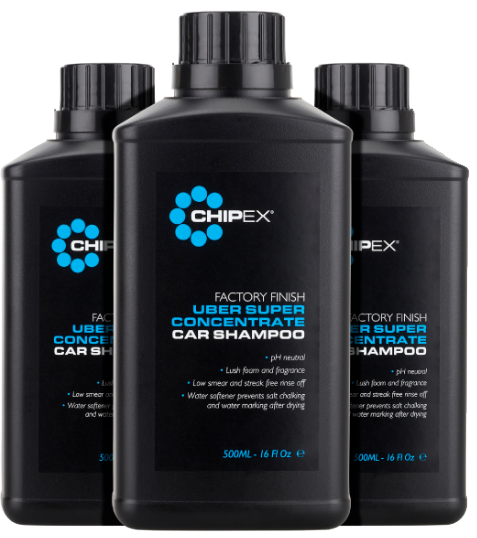
- Surface preparation products: pH‑neutral car shampoo, a wax and grease remover or isopropyl alcohol (70%+), and a tar remover for stubborn contamination. A clay bar or clay mitt helps lift bonded contaminants so paint adheres properly. Stock plenty of clean, high‑pile microfiber towels.
- Masking materials: Low‑tack automotive masking tape and masking paper or plastic sheeting to protect adjacent panels, trim, badges, and rubber from accidental sanding or product transfer.
- Sanding and refinement: 2000–3000 grit wet/dry paper with a small foam sanding block for leveling raised chip edges or dust nibs. For deeper clear-coat defects, 1500 grit may be used cautiously. Always keep the surface lubricated and avoid panel edges to prevent burn‑through.
- Rust control and primers: A rust converter for stone chips that have exposed metal, followed by a compatible primer to seal before color. This step prevents under-film corrosion that can undermine car paint scratch repair.
- Precision applicators: Microbrushes, fine paint sticks, and lint‑free applicator cloths for accurate paint placement in tiny chips or narrow scratches.
- Polishing and finishing: A fine/medium polishing compound and finishing polish, with hand applicator pads or a dual‑action polisher for quicker, more uniform results. These remove light haze after sanding and blend the repair. A quality paint sealant or wax provides protection once cured.
- Lighting and safety: A bright LED inspection light reveals remaining scuffs and high/low spots. Nitrile gloves, eye protection, and good ventilation are essential; use a respirator if spraying aerosols.
Example workflow: To remove car scuffs on a bumper, start with panel wipe and a light polish—many scuffs are paint transfer and disappear without color. If the scuff breaks through clear coat, use the touch-up system to fix paint chips car owners commonly see from road wear, then refine with compound for a diy car paint restoration that looks factory.
Step-by-Step Road Rash Repair Process
Road rash is usually a peppering of stone chips across the bonnet and bumper, often mixed with fine scuffs and light paint transfer. This DIY car road rash repair workflow focuses on clean prep, precise application, and careful blending for a near-invisible finish.
- Wash and decontaminate
- Pre-wash to remove grit, then contact wash with pH-neutral shampoo.

- Use an iron remover to dissolve embedded ferrous particles, then clay the affected panels.
- Degrease with isopropyl alcohol. Work in shade on a cool, dry panel (ideally 10–25°C).
- Confirm your colour
- Find the exact paint using your registration or OEM colour code.
- Shake the bottle well and test on the supplied card or a hidden area to confirm the 100% colour match.
- Assess chip edges and substrate
- For raised or sharp edges, lightly nib the perimeter with 2000–3000 grit wet paper wrapped around a small block; avoid enlarging the chip.
- If bare metal is visible, dab a rust-inhibitor and let it dry. For deep gouges beyond paint depth, professional filling may be required.
- Apply touch-up paint
- Load a micro-applicator sparingly. For pinhead chips, dot from the centre outward; for hairline scratches, lightly drag the tip along the scratch.
- Build thin layers, allowing quick-dry flash times (about 5–10 minutes) between passes until the fill is just proud of the surface.
- Example: A bonnet with 30+ peppered chips is best done in small zones, 6–8 chips at a time, to maintain control and consistency.
- Blend for a seamless finish
- After the paint sets, use the blending solution on a soft cloth to gently level high spots without pulling fresh paint from the crater.
- Work in straight, light passes and check often under good lighting. Repeat paint-and-blend cycles as needed.
- Refine and protect
- Once fully dry (typically 24 hours), refine with a fine finishing polish by hand to restore uniform gloss around the repairs.
- Apply wax or a sealant after full cure (about 5–7 days). Avoid aggressive washing during cure.

- Special cases
- Remove car scuffs/paint transfer first with tar/adhesive remover; you may not need to repaint if colour returns.
- For plastic bumper corners with a 4–6 cm scuff, touch up the thinnest areas of colour loss and blend; do not chase deep gouges with paint alone.
- Troubleshooting
- Fish-eyes or cratering: re-degrease and reapply.
- Colour mismatch: re-verify the code/registration and shake thoroughly.
- Ridge lines after blending: allow longer cure, then re-level lightly.
This approach combines precise automotive paint touch up with careful blending to fix paint chips car owners dread, deliver clean car paint scratch repair, and achieve effective DIY car paint restoration at home.
Tips for a Seamless Finish
Start with meticulous prep. Wash the area with a pH‑neutral shampoo, then decontaminate tar and iron deposits if present. Degrease thoroughly with isopropyl alcohol or panel wipe to remove waxes and road film—any residue will interfere with adhesion and leveling. Dry completely and mask adjacent trim or PPF. For sharp‑edged chips, a light pass with a fine blade to remove loose paint helps the repair key in.
Work in the right conditions. Aim for 15–25°C and low humidity, away from direct sun or wind. Good lighting (daylight or a CRI 90+ work light) will reveal low spots and high edges as you build layers.
Apply color in thin, controlled passes. Shake the touch‑up paint well and test on a card. For chips, load the microbrush lightly and place paint in the center, letting surface tension pull it outward. For linear scratches, glide along the scratch, keeping within the damaged groove. Avoid flooding; multiple thin layers beat one thick blob for car paint scratch repair. Allow each coat to flash off per instructions before the next.
Use the blending solution to level. Once you’ve slightly overfilled the defect and the paint has flashed, lightly dampen a cloth with the blending solution and glide across the surrounding clearcoat with minimal pressure. This removes excess on the high spots while preserving color in the defect, creating a seamless automotive paint touch up. Repeat paint/blend cycles as needed until the surface visually levels.
Refine only after full cure. If you still feel texture when running a fingertip over a plastic bag, wait until the paint has fully hardened, then very lightly denib with 2500–3000‑grit wet paper on a soft block, keeping the area lubricated and avoiding panel edges. Follow with a fine polish to restore gloss and clarity.
Protect the repair. After curing, apply a quality wax or sealant, or your preferred ceramic protection. This locks in your diy car paint restoration and helps remove car scuffs more easily in the future.
Avoid these pitfalls:

- Overfilling chips and scrubbing too hard with the blend solution
- Rushing cure times between coats
- Skipping decontamination or degreasing
- Working in poor lighting or on a hot panel
Used correctly, these techniques make DIY car road rash repair look factory, whether you’re looking to fix paint chips car or blend out light scuffs.
Maintaining Your Vehicle's Paintwork
Keeping paint in top condition starts with a consistent wash routine. Pre-rinse to remove grit, then use a pH-neutral shampoo with the two-bucket method and grit guards to avoid marring. Work top to bottom with soft microfibre mitts, and dry with plush towels or a blower to prevent water spots. Avoid brush-style automatic washes, which can create micro-scratches that undermine DIY car road rash repair.
Decontaminate regularly. Every 1–2 months, use a tar remover on lower panels and an iron fallout remover on the bonnet, roof, and tailgate to dissolve bonded contaminants. Follow with a clay bar or clay mitt to restore smoothness before sealing. This prevents embedded debris from abrading the clear coat during subsequent washes.
Protective layers extend the life of any car paint scratch repair. Apply a quality wax or synthetic sealant every 8–12 weeks, or consider a ceramic coating for longer-lasting chemical and UV resistance. In high-impact areas that suffer road rash—front bumper, bonnet edge, mirror caps, and sills—paint protection film or clear guards add a sacrificial barrier against stone strikes.
Inspect high-risk zones after each wash. Address chips and scuffs promptly to block moisture and salt. For small defects:
- Clean and degrease the area with isopropyl alcohol.
- If bare metal is exposed or light rust is present, neutralise with a rust converter and lightly abrade with a fine sanding stick.
- Perform an automotive paint touch up using a colour-matched system; a quick-drying formula and a blending solution will help level the edges to remove car scuffs and pin-point chips.
- Allow proper cure time, then seal the repair with your chosen protection.
A dedicated touch-up kit simplifies how you fix paint chips car owners commonly encounter. Chipex’s advanced, easy-to-use system offers a 100% colour match guarantee, a quick-drying paint, and a proprietary blending solution for a seamless finish. You can search by registration or colour code to ensure accuracy, and the kit’s accessories streamline application as part of your diy car paint restoration routine.
Adopt preventive habits too: increase following distance on freshly gritted roads, fit mud flaps, avoid tailgating lorries, and rinse panels after winter drives. Consistent care will reduce future damage and make each round of DIY car road rash repair faster and more effective.
Common DIY Repair Mistakes to Avoid
Small missteps can turn minor road rash into a bigger eyesore. Avoid these pitfalls to get a clean, factory-like result with DIY car road rash repair.
- Skipping prep. Washing alone isn’t enough. Decontaminate with tar and iron removers, then use a wax and grease remover. Any remaining sap, silicone, or road film will repel paint and cause fish-eyes.
- Misidentifying the damage. Scuffs are often transferred paint from another object and can be polished away; scratches cut the clearcoat or deeper; chips expose primer or metal. Treat each correctly: remove car scuffs with a mild compound first, reserve automotive paint touch up for actual paint loss.
- Choosing the wrong colour. Guessing by eye or buying a “universal” pen leads to mismatches. Use your car’s colour code or registration lookup in good, natural light. A 100% colour match is critical for seamless car paint scratch repair.
- Working in poor conditions. Direct sunlight, cold (<10°C), or high humidity cause solvent trap, hazing, or slow curing. Work indoors or shaded, on a clean, dry panel.
- Over-sanding. Aggressive grits (e.g., 400–800) will quickly burn through clearcoat. If you must level edges, use 2000–3000 grit wet and sand only the defect, not the whole area.
- Flooding chips with thick coats. Heavy applications dome, wrinkle, or crack. Build colour in thin layers, allowing proper flash and cure per the product instructions before using a blending solution.
- Ignoring rust and primer needs. For chips down to bare metal, neutralise rust and use an appropriate primer before colour to prevent future bubbling.
- Skipping masking. Tape off nearby edges and trim to avoid accidental staining or polishing through adjacent panels during diy car paint restoration.
- Contaminating the surface during application. Touching the area with bare fingers, using dusty microfibres, or reusing applicators introduces oils and grit that mar the finish.
- Using household solvents. Acetone or nail polish remover can melt clearcoat. Stick to automotive-safe cleaners and panel wipes.
- Rushing refinement. Level touch-up carefully with the recommended blending solution, then polish lightly. Don’t wax or seal until the paint has fully cured.
- Not test-fitting the process. Always test your full fix paint chips car workflow on an inconspicuous spot to confirm colour, technique, and timing before moving to the main area.
When Professional Help is Needed
Most DIY car road rash repair projects are straightforward, but some issues are better handled by a body shop to protect the finish, safety, and value of your vehicle.
Seek professional car paint scratch repair when:
- The scratch cuts through clearcoat and basecoat to bare metal or plastic, especially if it runs longer than a few inches or you can catch a fingernail along most of its length.
- Rust is present beyond a small speck—bubbling, flaking, staining, or a halo around a chip (larger than a 10p coin or near seams). Proper repair may require media blasting, rust conversion, or welding.
- Panels are dented or creased and the paint is cracked. This often needs paintless dent repair plus refinishing to restore contour and gloss.
- Clearcoat is peeling or failing across a wider area (sunburned or matte patches). Spot fixes won’t last; the panel will likely need to be re-cleared or resprayed.
- The finish is complex—pearls, tri-coats, matte, or satin—and blending across adjacent panels is required for a uniform “flop” and gloss.
- Bumpers or trim have tears, deep gouges, or textured plastics that need retexturing and flexible filler.
- There’s previous poor work: heavy orange peel, sinkage, map lines, or exposed filler that calls for block-sanding and high-build primer.
- ADAS hardware is nearby (radar panels, parking sensors, cameras). Incorrect paint thickness can impair function; follow OEM specs and consider a shop with calibration capability.
- Damage covers a contiguous area larger than a postcard, or dozens of chips pepper an entire bonnet—at that scale, a respray is more efficient than automotive paint touch up.
Red flags during diy car paint restoration include persistent color mismatch on a test spot (especially metallics that change with viewing angle), visible ridges after leveling, or recurring edge “ghosting.” Stop and consult a pro before making it worse.
For small stone chips, straight-line scuffs, and light bumper rash, a quality touch-up system remains ideal to fix paint chips on your car and remove car scuffs at home. An advanced kit with a 100% colour match guarantee, quick-drying paint, and a dedicated blending solution lets you complete precise, durable repairs without panel resprays.
Find Your Car's Paint Colour

- Choosing a selection results in a full page refresh.
- Press the space key then arrow keys to make a selection.